
Toyota Corolla (E120) 2002–2008 Repair Manual / Brake / Speed sensor front lh
Toyota Corolla (E120): Speed sensor front lh
Replacement
Hint
: replace the rh side by the same procedure as the lh side.
1. Remove front wheel
2. Remove front fender liner lh
3. Remove speed sensor front lh
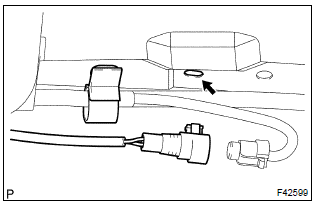
- Disconnect the speed sensor wire harness clamp from the body.
- disconnect the speed sensor connector.
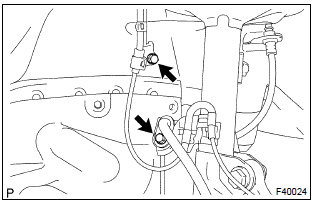
- Remove the 2 clamp bolts holding the sensor harness from the body and shock absorber.
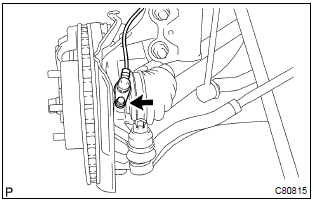
- Remove the bolt and speed sensor front lh.
Notice
: keep on the sensor tip clean.
4. Install speed sensor front lh
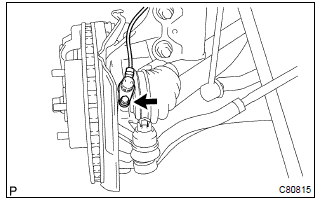
- Install the speed sensor front lh with the bolt.
Torque: 8.0 Nvm (82 Kgf·cm, 71 in.Vlbf)
Notice
: make sure the sensor tip is clean.
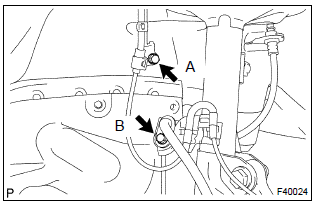
- Install the sensor harness clamp with the 2 bolts ”a” and
”b” to the body and shock absorber.
Torque:
bolt a: 8.0 Nvm (82 Kgf·cm, 71 in.Vlbf) bolt b: 29 nvm (296 Kgf·cm, 21 ft·lbf)
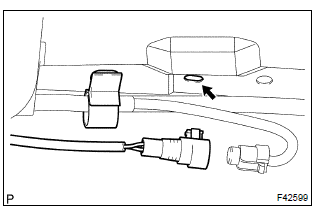
- Connect the speed sensor connector.
- connect the speed sensor wire harness clamp to the body.
5. Install front fender liner lh
6. Install front wheel
torque: 103 nvm (1,050 Kgf·cm, 76 ft·lbf)
7. Check abs speed sensor signal


Other materials:
Connecting a Bluetooth® audio player
► Registering an additional device
Select “Select Device” on the Bluetooth® audio control screen.
►Selecting a registered device
Select “Select Device” on the Bluetooth® audio control screen.
■Reconnecting a Bluetooth® phone
If the system cannot connect due to poor ...
Luggage compartment door
Adjustment
1. Inspect luggage compartment door panel sub–assy
check that the clearance is within the standard value.
2. Adjust luggage compartment door panel sub–assy
For forward/rearward and right/left adjustments, loosen
the bolts.
Torque: 7.0 N·m (71 kgf·cm, 62 i ...
For vehicles equipped with catalytic converter
Caution:
if large amount of unburned fuel flows into the converter, it may cause
overheating and a fire hazard.
To prevent this, observe the following precautions.
Use only unleaded gasoline.
avoid prolonged idling.
Avoid running the engine at idle speed for more than 20 minutes. ...