
Toyota Corolla (E120): Precaution
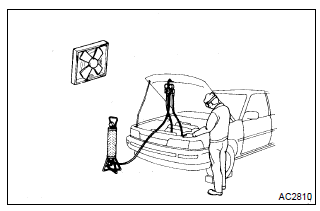
1. Do not handle refrigerant in an enclosed area or near an open flame
2. Always wear eye protection
3. Be careful not to get liquid refrigerant in your eyes or on your skin
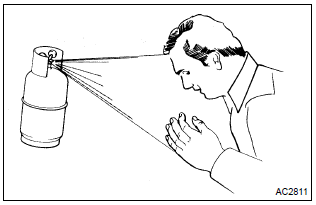
If liquid refrigerant gets in your eyes or on your skin.
- wash the area with lots of cool water.
Caution
: do not rub your eyes or skin.
- apply clean petroleum jelly to the skin.
- go immediately to a physician or hospital for professional treatment.
4. Never heat container or expose it to naked flame
5. Be careful not to drop container and not to apply physical shocks to it
6. Do not operate compressor without enough refrigerant in refrigerant system
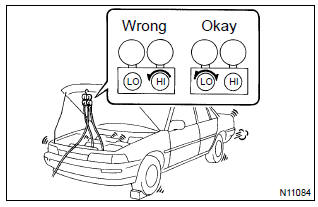
If there is not enough refrigerant in the refrigerant system oil lubrication will be insufficient and compressor burnout may occur, so take care to avoid this, necessary care should be taken.
7. Do not open high pressure manifold valve while compressor is operating
If the high pressure valves opened, refrigerant flows in the reverse direction and could cause the charging cylinder to rupture, so open and close the only low pressure valve.
8. Be careful not to overcharge system with refrigerant
If refrigerant is overcharged, it causes problems such as insufficient cooling, poor fuel economy, engine overheating etc.


Other materials:
Initialization
1. Reset memory
Caution:
perform the reset memory (at initialization) when replacing the automatic
transaxle assy, engine
assy or ecm.
Notice:
hand–held tester only
Turn the ignition switch off.
connect the hand–held tester to the dlc3.
turn the ignition switch to th ...
Seat belts
Make sure that all occupants
are wearing their seat
belts before driving the
vehicle.
WARNING
Observe the following precautions
to reduce the risk of injury in the
event of sudden braking, sudden
swerving or an accident.
Failure to do so may cause death
or serious injury.
■Wearing a seat belt
E ...
Trip information
■ Switching the display
Items displayed can be switched by pressing the display change button.
■ Odometer
Displays the total distance the vehicle has been driven.
■ Trip meter A/trip meter B
Displays the distance the vehicle has been driven since the meter was last reset.
...